FlexCard is not a place to earn. It sells virtual Visa and Mastercard cards that media buyers top up with crypto to pay for Facebook, TikTok and Google ads and for services like ChatGPT. The only earning angle is its referral program, which says it pays 30% of the service's income from each person you bring. Fees start at 3.5% per top-up plus $2.50 per card, and the company names no legal entity. Its Trustpilot score is a polarised 4.2 from 41 reviews, with several users saying their accounts were blocked or frozen. Skip it unless you already buy ads and understand the risk of leaving money with a card provider.
Quick Facts
How we reviewed it
We have not been paid by FlexCard and this page has no referral link. Everything below comes from FlexCard's public site and its Trustpilot profile, checked on 2 November 2026. We have not opened an account or topped up a card, so this review carries no score and no earnings claims. The screenshots are our own captures of the public pages.
What is FlexCard?
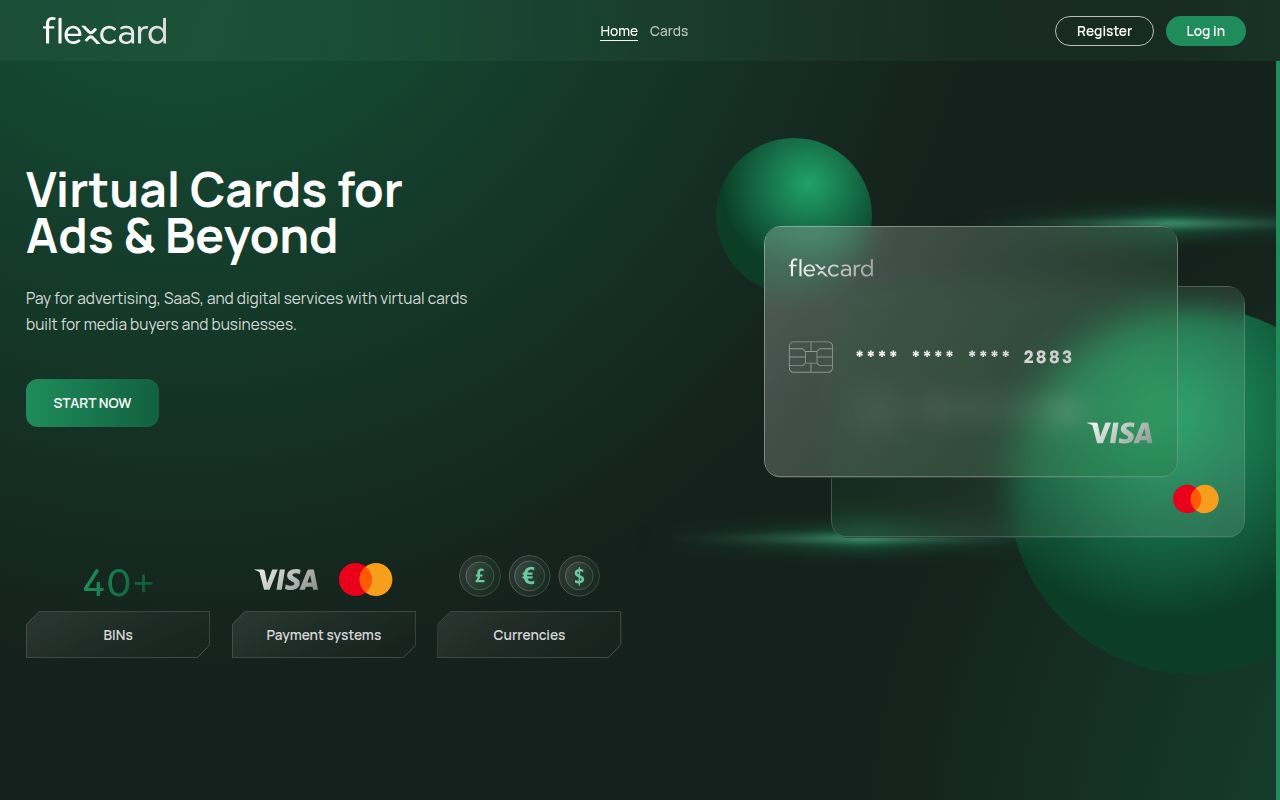
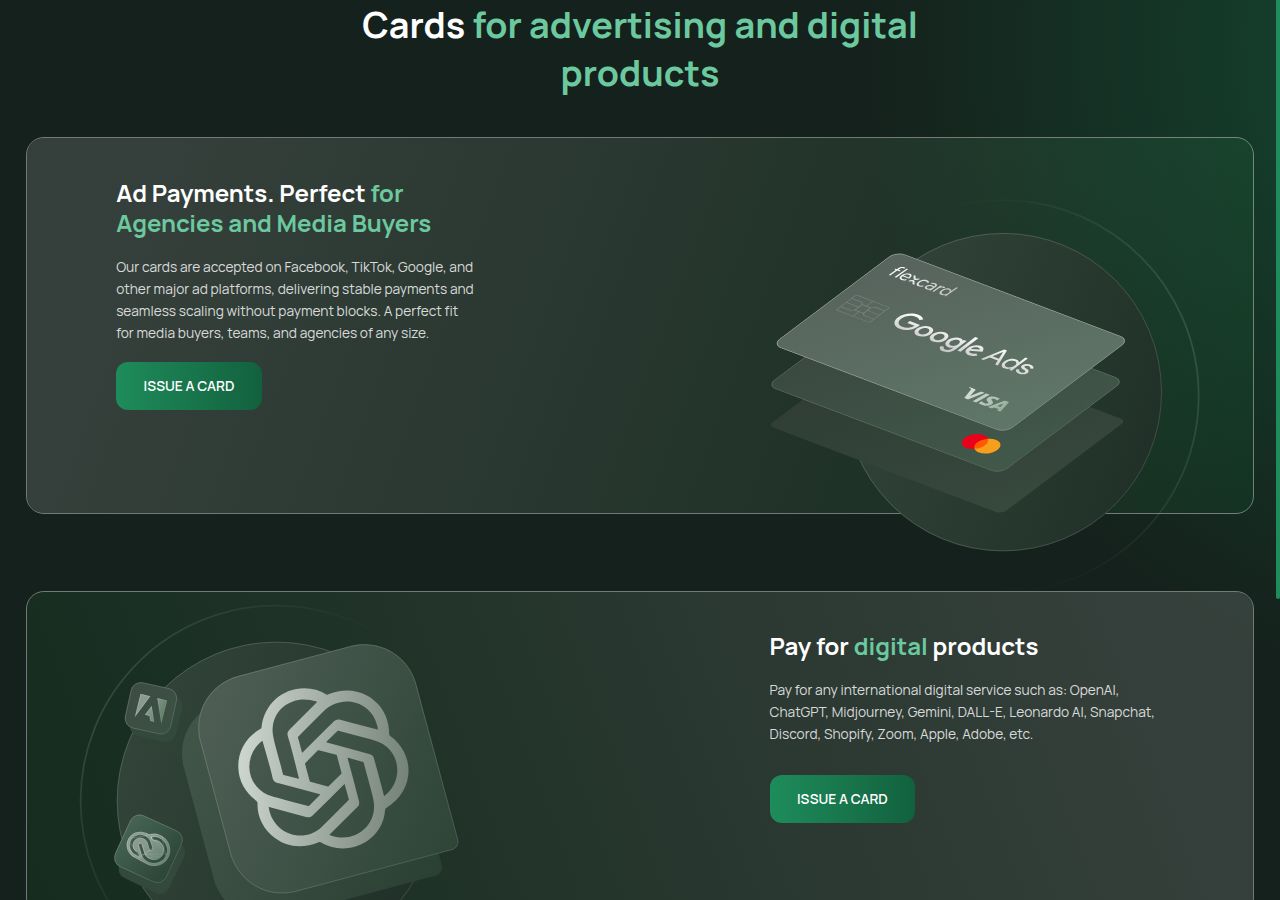
FlexCard (flexcard.cards) issues virtual cards in USD, EUR and GBP on Visa and Mastercard. Registration needs only an email, and you fund cards with USDT or USDC (TRC20 or ERC20) or with a EUR or USD bank transfer. The site says its cards work on Facebook, TikTok, Google and other ad platforms, and for services such as OpenAI, Midjourney, Zoom and Adobe.
What It Costs
- Top-ups: from 3.5%.
- Card issuance: from $2.50 each.
- Everything else: the site says all fees are shown per card BIN inside your account and that there are no hidden conversion fees. No full fee schedule is published for visitors.
As an example, putting $100 on one new card costs about $3.50 in top-up fees plus $2.50 for the card, which is about 6% before any other charges. That's fine for a business with ad budgets, and a heavy price for anyone trying to clear $1 a day.
The Referral Program
FlexCard says you receive 30% of the service's income from each user you refer, with your link in the Referrals tab of your account. New sign-ups are also offered 10 free ADS cards. The site doesn't explain how "income" is calculated, how often it's paid or what the minimum payout is. Because referred users only generate income if they buy ad cards, it's only of use if you know media buyers, and it isn't something a casual reader can build into a daily income.
What Users Say
FlexCard's Trustpilot profile is claimed and active: a 4.2 average from 41 reviews, 26 of them in the last twelve months, the latest in October 2026. The ratings are split, with 78% at five stars and 22% at one star, and nothing in between. Praise is for fast sign-up, crypto top-ups and cards that work for Meta and Google. The complaints are the serious part: accounts blocked or frozen without notice, support that can't be reached, and negative balances and disputed charges after cards were closed.
The company replies to every negative review, usually within a day. Its replies say accounts were closed over policy violations, such as using advertising cards for prohibited categories or a poor decline rate, that funds weren't frozen, and that negative balances are owed for authorisation fees. That may well be true in individual cases. The practical point is the same: your money sits with a card provider that can close your account under rules you must read first.
What the Site Doesn't Say
- No legal entity, registration or address, only Telegram support contacts.
- The card issuer and the supported countries aren't named.
- KYC rules aren't described.
- The terms, privacy policy and service rules are linked but sit behind separate pages.
Pros and Cons
Pros
- Email-only registration and quick card issuance, per users
- Crypto and bank top-ups, in USD, EUR and GBP
- Active Trustpilot profile with prompt company replies
- Many users report cards working for ad accounts
Cons
- Not an earning site, so it doesn't fit a $1-a-day plan
- Fees of about 6% on a small top-up
- No named company, issuer or published full fee schedule
- Reports of blocked accounts and unreachable support
- Referral income depends on others buying ad cards
Who FlexCard Suits
It might suit you if you run paid ads, can read the terms and policy list carefully, and keep only small balances on the card at any time.
It does not suit you if you want to earn without spending, hold no crypto, or want a regulated, named card issuer.
Tips if You Try It
- Read the service rules first. Closures are mostly policy cases, so know the prohibited categories.
- Start small. Top up the least you need and don't park money on a card.
- Test a withdrawal before you scale.
- Check the fee for your specific card BIN in the account before topping up.
Before you use any provider that holds your funds, our warning signs an earning site is about to stop paying is a useful checklist.
Final Verdict
Verdict: a tool for ad buyers, not a way to earn
FlexCard looks like a working service for people who buy ads with crypto, and many users are happy with it. For a micro-earner it's a cost, not an income, and the unnamed operator and reports of frozen accounts are reasons to keep balances tiny. If you want to earn, use the platforms below.
Where to Put Your Time Instead
These are our top-rated platforms that need no deposit. Each links to our full review.
- SnazzyPTC: our top pick, a no-deposit PTC paying in BUCK on Solana.
- Prolific: paid academic studies and surveys.
- Respondent: longer, better-paid research interviews.
- Swagbucks and Freecash: offer and survey sites with low cash-out limits.
- TopCashback and Brave: earn from shopping you already do and from browsing.
- FaucetCrypto and FireFaucet: daily faucet claims to a free FaucetPay wallet.
- Honeygain: passive bandwidth sharing.
New to all this? Start with the best micro-task sites of 2026.
Sources
All checked on 2 November 2026.
Related Reviews
Was this review helpful?